The Fit India movement has sparked a nationwide conversation about staying active, but many of us still think a gym membership or fancy gear is a prerequisite. The truth is, home fitness without equipment can be surprisingly effective, affordable, and perfectly suited to Indian homes, whether you live in a compact Mumbai flat or a spacious Delhi bungalow.
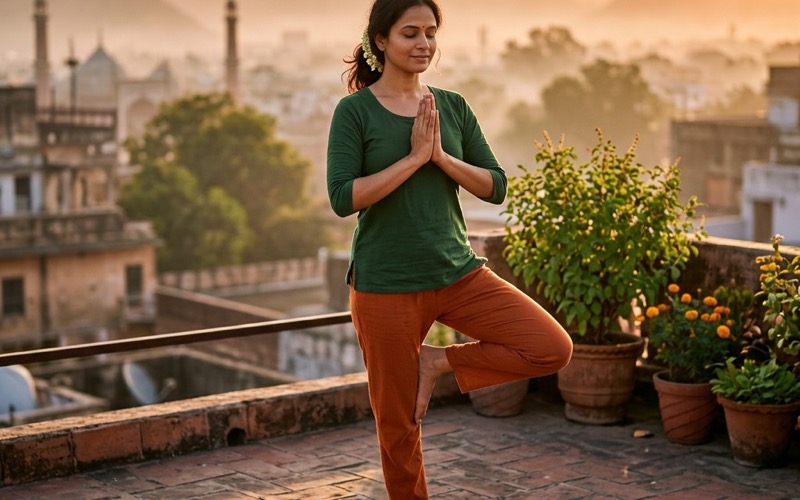
From the verandah of a Kerala tharavadu to a balcony in Bengaluru, your body weight and a little creativity are all you need. This guide draws inspiration from the Fit India cycle to help you build a sustainable routine using desi wisdom, seasonal rhythms, and zero-cost resources.
Key Takeaways
- Bodyweight training builds functional strength, improves insulin sensitivity, and supports heart health without any gear.
- The Fit India movement encourages 30-60 minutes of daily activity, easily split into short bouts throughout the day.
- Household items like water bottles, backpacks, and sturdy chairs can safely add resistance.
- Seasonal eating and traditional spices like haldi and adrak enhance recovery and reduce inflammation.
- Consistency beats intensity; a 15-minute daily habit outperforms a sporadic hour-long session.
Why the Fit India Cycle Matters for Home Workouts
The Fit India movement, launched by the Government of India, aims to make physical activity a daily habit for every citizen. Its cycling events across cities highlight that fitness is a journey, not a destination. This philosophy aligns perfectly with home fitness without equipment because it removes barriers like cost, commute, and intimidation.
According to the ICMR-NIN Dietary Guidelines for Indians, regular physical activity combined with a balanced diet helps prevent lifestyle conditions such as type 2 diabetes, hypertension, and abdominal obesity. A home-based routine makes it easier to hit the recommended 150 minutes of moderate activity per week, even on busy weekdays.
Building Your No-Equipment Workout Plan
Designing a no equipment workout plan starts with four foundational movement patterns: push, pull, squat, and hinge. Since pulling movements are harder without a bar, we substitute with towel rows or doorframe rows. Aim for three to four sessions per week, progressing by adding reps, slowing tempo, or reducing rest.
Begin each session with a five-minute warm-up: marching in place, arm circles, neck rolls, and dynamic stretches like leg swings. Cool down with static holds for the chest, hip flexors, hamstrings, and calves. This structure mirrors the progressive overload principle used in our strength training guide for beginners, adapted for zero equipment.
Sample Weekly Schedule
- Monday: Full-body circuit (squats, push-ups, glute bridges, plank variations) – 3 rounds.
- Tuesday: Active recovery – brisk walk, yoga, or stair climbing.
- Wednesday: Lower-body focus (lunges, step-ups, calf raises, wall sit) – 3 rounds.
- Thursday: Rest or gentle mobility flow.
- Friday: Upper-body/core (push-up variations, towel rows, dead bug, side plank) – 3 rounds.
- Saturday: Fun cardio – dancing to Bollywood beats, skipping rope, or cycling.
- Sunday: Rest, meal prep, and mental reset.
Using Everyday Household Items as Fitness Tools
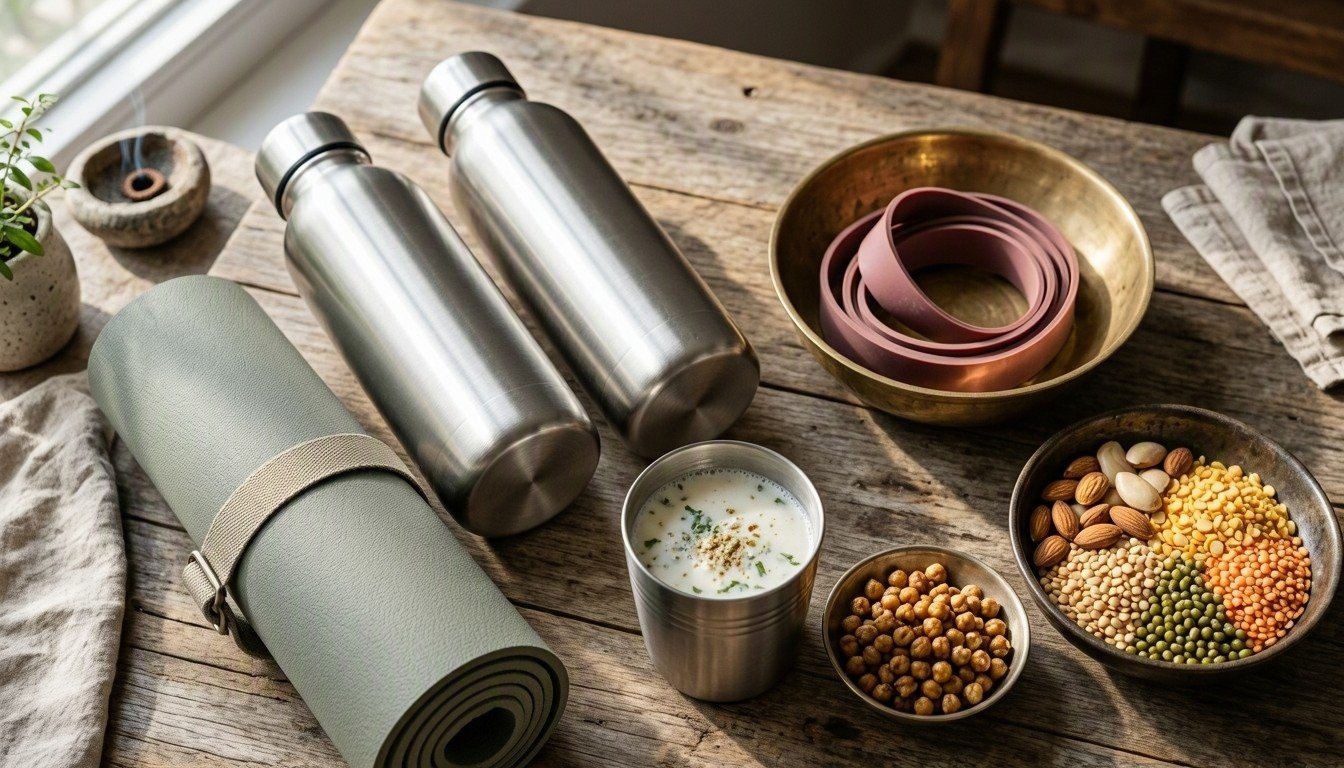
You don't need dumbbells when your kitchen and living room already hold perfect substitutes. A 1-litre water bottle weighs roughly 1 kg; two bottles work for shoulder presses, bicep curls, and lateral raises. A backpack filled with books (5-10 kg) turns into a weighted vest for squats and lunges.
A sturdy dining chair supports tricep dips, elevated push-ups, and Bulgarian split squats. A thick towel on a smooth floor enables sliding mountain climbers, hamstring curls, and pike push-ups. Always test stability before loading any improvised equipment. This resourceful approach echoes the jugaad spirit celebrated in many Indian households.
Desi Nutrition for Recovery and Energy
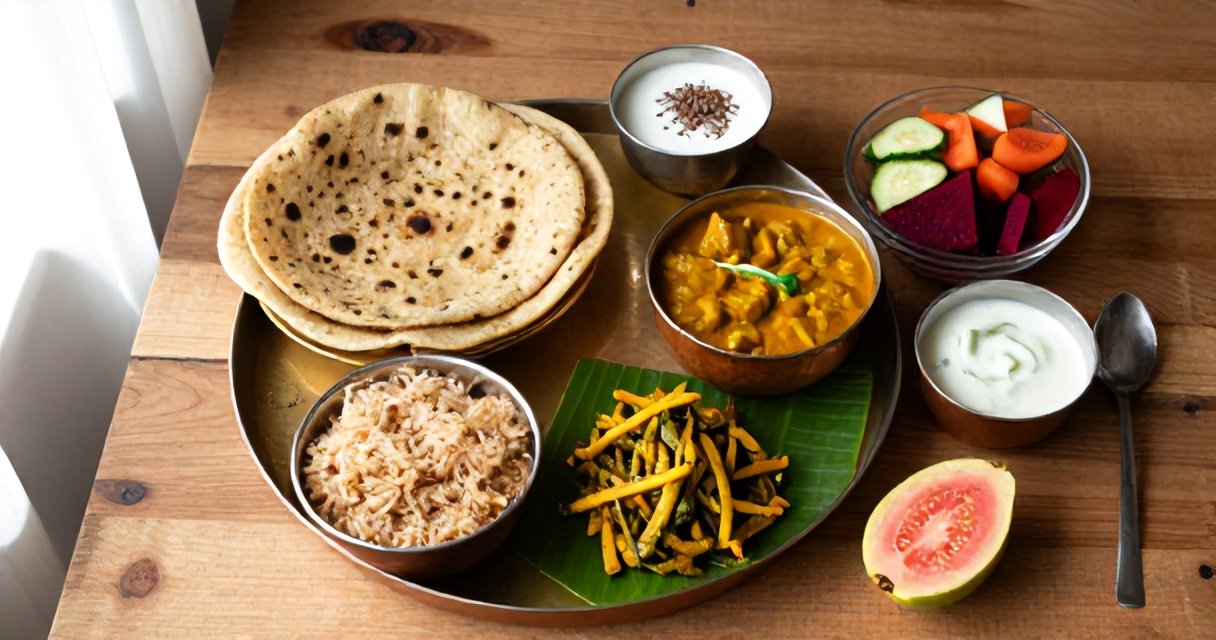
Exercise is only half the equation; what you eat determines how well you recover. The new ICMR dietary guidelines emphasize whole grains, pulses, seasonal vegetables, and healthy fats. After a workout, a glass of chaas with a pinch of roasted cumin replenishes electrolytes and protein.
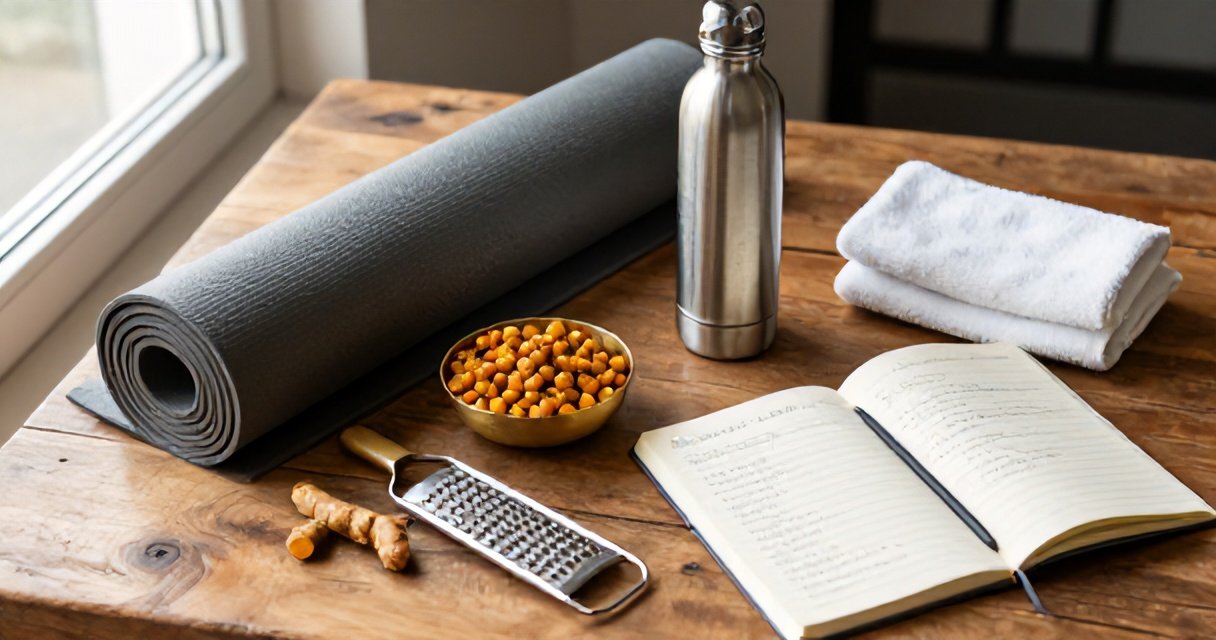
Include haldi (turmeric) in post-workout meals — its curcumin content may help manage exercise-induced inflammation, as noted in several peer-reviewed studies. A bowl of dal-chawal with a dollop of ghee provides complete amino acids and sustained energy. For a quick bite, try roasted chana with a few almonds; this combo delivers protein, fibre, and magnesium for muscle relaxation.
Adapting Workouts to Indian Seasons and Festivals
Summer heat in Rajasthan or humidity in Chennai can make indoor workouts uncomfortable. Shift intense sessions to early morning or late evening. Hydrate with nimbu pani, coconut water, or aam panna. During monsoons, when outdoor walks are risky, increase indoor circuit density — shorter rest, more rounds.
Festivals like Diwali or Eid often disrupt routines. Instead of skipping entirely, do a 10-minute ghar par exercise kaise kare micro-session: bodyweight squats, push-ups, and planks. This maintains the habit loop. Pair festive sweets with a protein-rich snack beforehand to blunt glucose spikes, a strategy discussed in our article on high-fiber Indian diet plans for blood sugar.
Staying Motivated: Community and Tracking
Motivation dips are normal. The Fit India cycle thrives on community — join a local walking group, a WhatsApp accountability circle, or a virtual challenge. Track workouts in a simple notebook: date, exercises, sets, reps, and how you felt. Seeing consistency on paper builds self-efficacy.
Set process goals ("complete 12 sessions this month") rather than outcome goals ("lose 5 kg"). Celebrate non-scale victories: climbing stairs without breathlessness, better sleep, improved mood. Research suggests social support and self-monitoring are among the strongest predictors of long-term adherence to physical activity.
Frequently Asked Questions
Ghar par bina equipment ke fitness kaise shuru karein?
Begin with a 10-minute daily routine: warm-up, two rounds of squats, knee push-ups, glute bridges, and a 20-second plank. Gradually add rounds and variations as strength improves.
Bodyweight exercises se weight loss hota hai kya?
Yes, when combined with a calorie-appropriate diet. Bodyweight circuits elevate heart rate and build muscle, which supports metabolism. Consistency and progressive overload are key drivers of fat loss.
Fit India movement ke hisaab se kitna exercise chahiye?
The movement aligns with WHO guidelines: at least 150 minutes of moderate or 75 minutes of vigorous activity weekly, plus muscle-strengthening activities on two or more days.
Monsoon mein indoor cardio kaise karein bina machine ke?
Try high-knee marches, jumping jacks, burpee variations, skipping (with or without rope), or dance cardio to upbeat music for 20-30 minutes.
Kya seniors bhi home fitness without equipment kar sakte hain?
Absolutely. Chair-supported squats, wall push-ups, seated marches, and balance drills are safe starting points. Always consult a doctor before beginning, especially with existing conditions.
Your Fit India Journey Starts at Home
The beauty of home fitness without equipment lies in its simplicity and sovereignty — you decide the time, place, and pace. Whether you're a student in a hostel room, a parent juggling work and kids, or a retiree enjoying slower mornings, your body is the most portable gym you'll ever own.
Take inspiration from the Fit India cycle, sprinkle in desi nutrition wisdom, and build a habit that lasts beyond any trend. What's the first bodyweight move you'll try today? Share your experience in the comments below.
💚 Want more simple, science-backed tips for eating well the Indian way? Download the Healthilicious Plate app for daily health guides, nutrition tips and healthy desi recipes right on your phone.
Disclaimer: This article is for general information only and is not medical advice. Please consult a qualified doctor or registered dietitian before making changes to your diet, especially if you have a health condition, are pregnant or take medication.