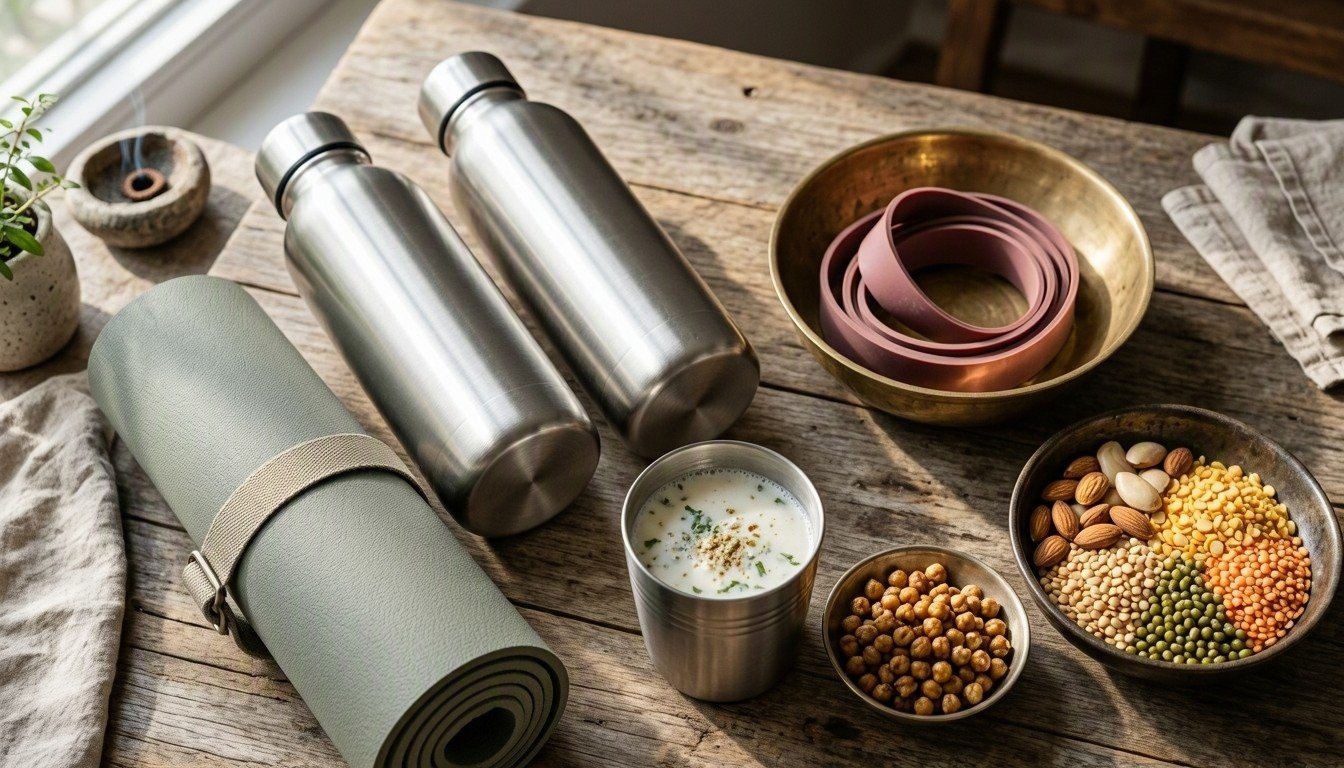
Starting strength training once weekly after 50 is one of the most effective habits Indian adults can adopt for healthy ageing. Research suggests that even a single well-structured session per week can stimulate muscle protein synthesis, improve insulin sensitivity and support bone density. The ICMR-NIN Dietary Guidelines for Indians highlight the importance of regular physical activity alongside adequate protein to prevent sarcopenia, the age-related loss of muscle mass.
Many people assume they need a gym membership or daily workouts, but consistency with one focused session fits realistically into busy schedules involving family, work and festivals. This guide covers safe exercises, progression tips and nutrition advice tailored to Indian kitchens and lifestyles.
Key Takeaways
- One weekly strength session can preserve muscle mass and metabolic health after 50.
- Compound movements like squats, push-ups and rows give the most benefit per minute.
- Aim for 1.0–1.2 g protein per kg body weight daily from dals, paneer, curd, eggs or fish.
- Warm-up, proper form and gradual progression matter more than heavy weights.
- Pair training with good sleep, hydration and stress management for best results.
Why Strength Training Matters After 50
After the age of 50, adults can lose 3–5% of muscle mass per decade if they stay inactive. This loss, called sarcopenia, affects balance, metabolism and the ability to perform daily tasks like climbing stairs or lifting grocery bags. The World Health Organization recommends muscle-strengthening activities at least two days a week, but evidence shows that even one high-quality session provides measurable benefits for beginners.
For Indian adults managing conditions like prediabetes, high blood pressure or joint stiffness, resistance work improves glucose uptake by muscles and supports joint stability. A study published in the Journal of the Association of Physicians of India noted that progressive resistance training improved glycemic control in older adults with type 2 diabetes. Starting with once-weekly sessions builds confidence and reduces injury risk.
Designing Your Weekly Session
A balanced session targets all major muscle groups in 30–40 minutes. Focus on compound exercises that mimic daily movements: squatting, pushing, pulling and hinging. Begin with bodyweight or light resistance such as water bottles (500 ml or 1 L), a backpack filled with books, or affordable resistance bands available online.
Structure the workout as a circuit: perform each exercise for 10–12 controlled repetitions, rest 60 seconds, then move to the next. Complete two rounds initially, progressing to three as fitness improves. Always start with a 5-minute warm-up of marching in place, arm circles, neck rolls and gentle torso twists to prepare joints and raise core temperature.
Six Beginner-Friendly Exercises for Home
These six moves require minimal equipment and space. Modify intensity by changing leverage, range of motion or load.
- Chair-assisted squat: Sit down and stand up from a sturdy dining chair without using hands. Progress to hovering above the seat.
- Wall push-up: Place hands shoulder-width on a wall, lower chest toward the wall, push back. Move feet farther back to increase difficulty.
- Standing band row: Anchor a resistance band at chest height, pull elbows back squeezing shoulder blades together.
- Glute bridge: Lie on a mat, knees bent, feet hip-width. Lift hips, squeeze glutes, hold 2 seconds, lower slowly.
- Overhead press with water bottles: Hold a bottle in each hand at shoulder level, press upward, lower with control.
- Dead bug: Lie on back, arms up, knees at 90 degrees. Extend opposite arm and leg slowly, keep lower back pressed to floor.
Progression Without a Gym
Progressive overload is the key to continued improvement. Since you train once weekly, small weekly changes accumulate. Increase difficulty by adding 1–2 repetitions per set, slowing the tempo (3 seconds down, 1 second up), reducing rest between exercises, or adding load (heavier bottles, thicker band).
Track your session in a notebook or phone app: note exercises, reps, load and how challenging it felt (rate of perceived exertion 1–10). Aim to stay around 7–8 out of 10. If joint discomfort appears, regress the movement or consult a physiotherapist. Our guide to 10 morning habits that transform your health includes mobility drills that complement this routine.
Nutrition to Support Muscle After 50
Protein intake is critical for repair and growth. The ICMR-NIN 2024 guidelines suggest 0.8–1.0 g protein per kg body weight for healthy adults, but many experts recommend 1.0–1.2 g/kg for older adults to counter anabolic resistance. Spread intake across three main meals and one snack.
Indian vegetarian sources: 1 cup cooked dal (18 g), 100 g paneer (18 g), 1 cup thick curd (10 g), 2 whole eggs (12 g), 50 g soya chunks (25 g). Non-vegetarian options include fish, chicken or mutton. Pair protein with vitamin D (sunlight, fortified milk), calcium (ragi, sesame seeds, drumstick leaves) and omega-3 (flaxseed, walnuts, fatty fish) for bone and joint health. For label-reading tips on packaged protein foods, see how to read food labels.
Recovery, Sleep and Lifestyle Factors
Muscle grows during recovery, not during the workout. Prioritise 7–8 hours of sleep; growth hormone peaks during deep sleep. Hydrate with 30–35 ml water per kg body weight daily — more on training days. Include a post-session snack within 60 minutes: a glass of chaas with roasted chana, or a banana with peanut butter.
Manage chronic stress through pranayama, meditation or gentle evening walks; high cortisol can impair muscle repair. If you have osteoarthritis, hypertension or a cardiac condition, get medical clearance before starting. A qualified physiotherapist or certified trainer familiar with older adults can refine your form in the first few sessions.
Frequently Asked Questions
Is one day strength training enough after 50?
Yes, research shows a single weekly session of progressive resistance training can increase strength and muscle mass in previously untrained older adults, especially when combined with daily walking and adequate protein.
What if I have knee pain during squats?
Reduce depth, use a higher chair, or switch to seated leg extensions with a resistance band. Strengthening glutes and hips with bridges and clamshells often reduces knee load over time.
Can I do this if I have high blood pressure?
Generally yes, but avoid holding your breath (Valsalva manoeuvre). Exhale on exertion, use lighter loads with higher reps, and monitor BP before and after. Always get doctor clearance first.
Do I need supplements like whey protein?
Not necessarily. Most Indian diets can meet protein needs through whole foods. Whey is convenient if dietary intake falls short; choose a third-party tested brand and discuss with a dietitian.
How long before I see results?
Neuromuscular adaptations (better coordination, strength) appear within 4–6 weeks. Visible muscle changes typically take 10–12 weeks of consistent weekly training plus daily protein targets.
Your Stronger Self Starts This Week
Strength training once weekly after 50 is a realistic, science-backed commitment that fits Indian routines. Pick a day, set a 35-minute block, gather two water bottles and a sturdy chair, and begin with the six exercises above. Consistency beats intensity in the long run.
What is the one movement you find most challenging today, and how will you modify it to get started this weekend?
💚 Want more simple, science-backed tips for eating well the Indian way? Download the Healthilicious Plate app for daily health guides, nutrition tips and healthy desi recipes right on your phone.
Disclaimer: This article is for general information only and is not medical advice. Please consult a qualified doctor or registered dietitian before making changes to your diet, especially if you have a health condition, are pregnant or take medication.