If you have ever reached for a steaming cup of adrak chai after a heavy meal, you already know the comfort ginger brings. Modern research now backs what our grandmothers have long practised: ginger daily benefits digestion blood sugar balance in ways that fit perfectly into an Indian kitchen.
From calming an upset stomach to supporting steadier glucose levels, this humble rhizome deserves a permanent spot on your spice shelf. Let us explore how a few grams a day can make a measurable difference, along with practical, budget-friendly ways to use it.
Key Takeaways
- Ginger contains gingerols and shogaols that stimulate digestive enzymes and may improve gastric emptying.
- Regular intake of 1–3 grams fresh ginger daily is linked to better fasting blood glucose and HbA1c trends in people with type 2 diabetes.
- Simple preparations like adrak water, chutney, or tempering fit easily into everyday Indian cooking.
- Pair ginger with turmeric, black pepper, or lemon to enhance absorption and flavour without extra calories.
- People on blood-thinning medication or with gallstones should consult a doctor before high-dose supplements.
Why Ginger Works: The Science Behind the Spice
Ginger (Zingiber officinale) owes its pungent kick to gingerols, which convert to shogaols when dried or heated. According to the ICMR-NIN Dietary Guidelines for Indians, culinary spices contribute antioxidants and bioactive compounds that support metabolic health. Gingerols have been shown in multiple peer-reviewed studies to enhance the activity of digestive enzymes such as lipase and amylase, helping break down fats and carbohydrates more efficiently.
For blood sugar, research suggests ginger may improve insulin sensitivity by modulating key signalling pathways and reducing oxidative stress in pancreatic cells. A systematic review of clinical trials noted that daily supplementation with 1.5–3 grams of ginger powder over 8–12 weeks lowered fasting blood glucose and HbA1c modestly compared with placebo. These amounts are easily achieved through food rather than pills.
Easy Ways to Add Ginger to Your Daily Routine
You do not need elaborate recipes. A 2-cm piece of fresh ginger (about 5–6 grams) grated into your morning routine covers the effective dose. Try these no-fuss ideas that respect Indian meal patterns and budgets.
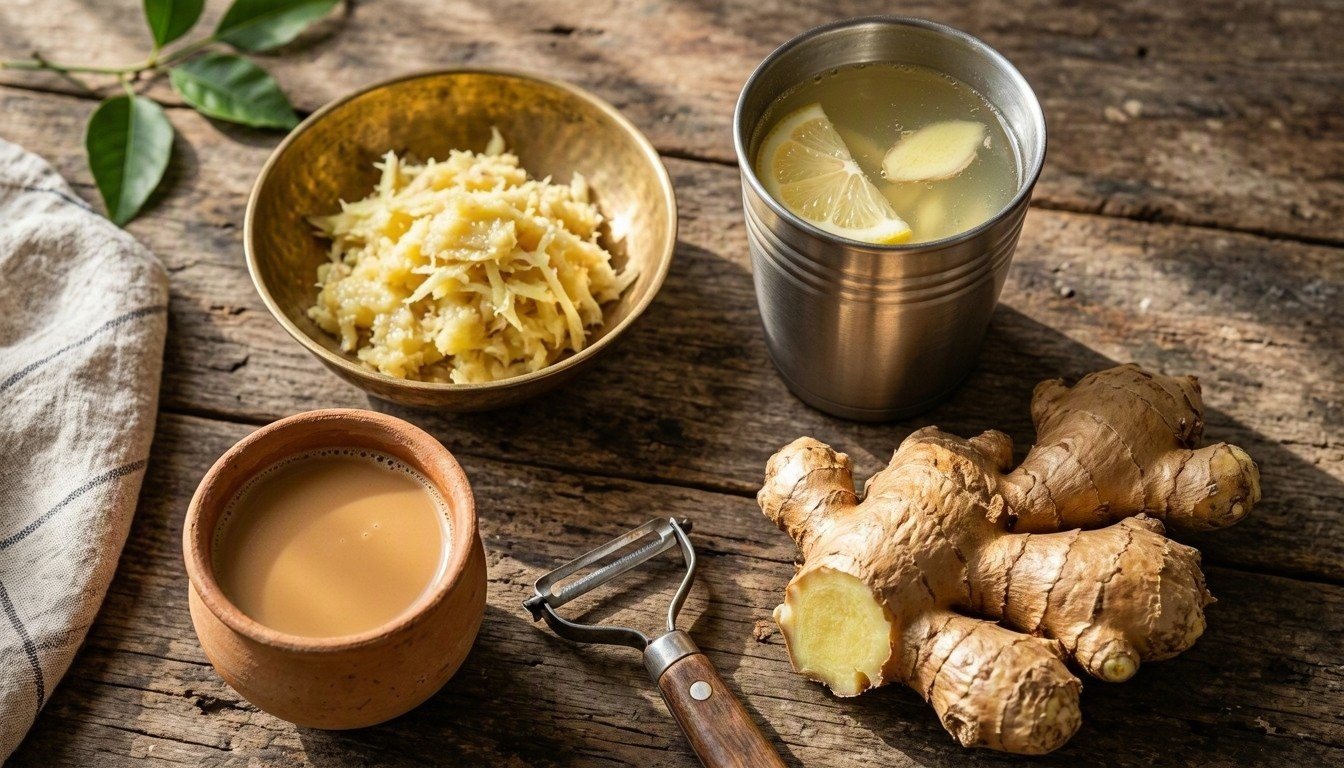
- Adrak pani: Boil 1 cup water with 5 g grated ginger for 3 minutes. Strain, add a squeeze of lemon and a pinch of black salt. Drink warm on an empty stomach.
- Tadka upgrade: Add finely minced ginger along with garlic to the hot oil before adding cumin or mustard seeds for dals, sabzis, or sambar.
- Quick chutney: Blend 20 g ginger, 1 green chilli, handful of coriander, lemon juice, and salt. Stores 3–4 days in the fridge.
- Ginger-garlic paste: Make a weekly batch (equal parts by weight) and freeze in ice-cube trays for instant use.
Seasonal and Regional Twists
India’s diverse cuisines already celebrate ginger in seasonal ways. In winter, Punjabi households simmer adrak with tulsi and black pepper for a warming kadha. Coastal Karnataka adds fresh ginger to coconut-based tambli, a thin yogurt-coconut drink served with rice. During monsoon, Bengali kitchens stir grated ginger into shukto, a bitter vegetable medley that stimulates digestion before the main meal.
Summer calls for lighter preparations. A teaspoon of ginger juice mixed into buttermilk (chaas) with roasted cumin powder and mint keeps you hydrated and aids digestion after a spicy lunch. In the Northeast, fresh ginger is pounded with king chilli and fermented bamboo shoot for a fiery pickle that lasts months. Using what is local and in season keeps cost low and nutrient density high.
Ginger and Blood Sugar: What the Evidence Shows
While ginger is not a replacement for medication, it can be a supportive dietary strategy. The American Diabetes Association acknowledges that certain spices, including ginger, may have a modest glucose-lowering effect when used consistently as part of a balanced diet. A 2022 meta-analysis of randomised controlled trials found that ginger intake reduced fasting blood sugar by an average of 10–12 mg/dL and HbA1c by 0.3–0.4 percentage points in adults with type 2 diabetes.
Importantly, these studies used culinary doses — roughly 1–3 grams of powder or 10–15 grams of fresh rhizome daily — not mega-dose extracts. That translates to about one large thumb-sized piece of fresh ginger spread across meals. Pairing it with fibre-rich whole grains, legumes, and vegetables amplifies the benefit by slowing glucose absorption further.
Digestive Relief for Common Indian Gut Issues
Bloating after a heavy rajma-chawal lunch? Acid reflux from late-night chole bhature? Ginger’s prokinetic effect helps move food through the stomach faster, reducing the window for fermentation and gas production. The ICMR-NIN guidelines note that traditional spices like ginger, ajwain, and hing are commonly used in Indian households for dyspepsia and flatulence.
For motion sickness during long bus or train journeys, chew a thin slice of fresh ginger with a pinch of rock salt. For morning nausea in pregnancy, sipping cold ginger-infused water throughout the day is a time-tested remedy supported by obstetric guidelines. Always check with your doctor for personalised advice, especially during pregnancy.
Smart Buying, Storing, and Prep Tips
Choose firm, smooth-skinned rhizomes with a sharp, spicy aroma. Avoid wrinkled or mouldy pieces. Store unpeeled ginger in a paper towel inside a zip-lock bag in the refrigerator vegetable drawer; it stays fresh for three weeks. For longer storage, peel, chop, and freeze in single-use portions.
When cooking, add ginger at two stages for layered flavour: minced early in the tempering for depth, and a fresh grating at the end for brightness. Heat reduces gingerol content slightly but increases shogaols, which are also bioactive. So both raw and cooked forms have value. If you prefer dried ginger powder (saunth), use one-third the quantity of fresh, as it is more concentrated.
Combining Ginger with Other Kitchen Staples
Synergy makes the medicine tastier. Ginger plus turmeric (haldi) and black pepper (kali mirch) is a classic trio: piperine from pepper enhances curcumin absorption, while gingerols add their own anti-inflammatory action. This combination appears in our guide to Ayurvedic remedies your dadi was right about.
Another winning pair is ginger and fenugreek (methi) seeds. Soak 1 teaspoon methi seeds overnight, then boil with 5 g ginger in 1 cup water. Strain and drink warm. This simple decoction is traditionally used for blood sugar support and digestive comfort. For more on how whole spices fit into a modern Indian plate, see the new ICMR dietary guidelines 2024.
Frequently Asked Questions
Can I drink ginger water every morning for diabetes?
Yes, a cup of warm ginger water (5 g fresh ginger boiled in 200 ml water) on an empty stomach is safe for most people and may help improve fasting glucose when combined with a balanced diet and prescribed medication. Monitor your sugar levels and inform your doctor.
Does dried ginger powder (saunth) work as well as fresh adrak?
Saunth is more concentrated; use about one-third the weight of fresh ginger. It retains shogaols which are also beneficial for digestion and blood sugar, though some volatile oils are lost during drying.
How much ginger is too much in a day?
Culinary amounts up to 4 grams fresh ginger (roughly a 3-cm piece) daily are generally safe. Higher doses may cause heartburn, diarrhoea, or interact with blood thinners. Pregnant women should limit to 1 gram daily unless advised otherwise.
Can ginger replace my diabetes medicine?
No. Ginger is a supportive food, not a substitute for prescribed medication. Always continue your treatment plan and discuss any dietary changes with your endocrinologist or a registered dietitian.
Is ginger tea with milk and sugar okay for blood sugar?
Milk and sugar add calories and carbs that can spike glucose. For blood sugar management, prefer black ginger tea or adrak pani with lemon and black salt. If you enjoy chai, use low-fat milk and skip sugar, or use a plant-based alternative.
Making Ginger a Daily Habit
Start small: grate a little ginger into your morning omelette, stir it into dal tadka, or blend it into a chutney that lasts the week. Consistency beats intensity. Over weeks, these micro-doses add up to better digestion, steadier energy, and a kitchen that smells like home. What is your favourite way to use ginger — adrak chai, a spicy pickle, or something else? Share your go-to nuskha in the comments below.
💚 Want more simple, science-backed tips for eating well the Indian way? Download the Healthilicious Plate app for daily health guides, nutrition tips and healthy desi recipes right on your phone.
Disclaimer: This article is for general information only and is not medical advice. Please consult a qualified doctor or registered dietitian before making changes to your diet, especially if you have a health condition, are pregnant or take medication.