Managing blood sugar does not always mean reaching for a pill bottle first. Research suggests that a well-structured High fiber Indian diet plan beats medicine for blood sugar control in many early-stage cases, especially when combined with regular movement and stress management. The ICMR-NIN Dietary Guidelines for Indians emphasise that dietary fibre from whole grains, legumes, vegetables and fruits slows glucose absorption and improves insulin sensitivity naturally.
In our Indian kitchen, we already have access to powerful ingredients like moong dal, bhindi, methi leaves, whole wheat rotis and seasonal guava. This guide shows you how to put them together into a practical, affordable daily routine that supports stable glucose levels without giving up the flavours you love.
Key Takeaways
- Soluble fibre from oats, barley (jau), legumes and fenugreek seeds forms a gel that slows sugar release into the bloodstream.
- Aim for 25–30 grams of total fibre daily as per ICMR-NIN guidelines; most Indian adults fall short by half.
- Pair every carbohydrate portion with protein and fibre (dal + roti + sabzi + salad) to blunt post-meal spikes.
- Simple swaps like brown rice for white, whole wheat atta for maida, and whole fruit for juice make a measurable difference.
- Consistency beats perfection: small daily habits like soaking methi seeds overnight work better than occasional strict diets.
Why Fibre Matters More Than You Think
Dietary fibre is the indigestible part of plant foods that travels through the gut largely intact. Soluble fibre dissolves in water to form a viscous gel, which delays gastric emptying and slows the entry of glucose into the blood. Insoluble fibre adds bulk, supports regular bowel movements and feeds beneficial gut bacteria that produce short-chain fatty acids linked to better metabolic health.
The ICMR-NIN Dietary Guidelines for Indians recommend at least 25 grams of fibre per day for women and 30 grams for men. Yet national surveys show average intakes hover around 15 grams. Closing this gap with familiar foods is one of the most cost-effective strategies for prediabetes and type 2 diabetes management.
Top Desi Fibre Heroes You Already Know
You do not need expensive supplements or imported superfoods. Our regional produce aisles are packed with fibre-rich options that fit every budget and season.
Legumes and Pulses
Whole moong, chana, rajma, lobia (black-eyed peas) and horse gram (kulthi) deliver 6–8 grams of fibre per cooked cup. Sprouting them increases bioavailability and reduces cooking time. A simple sprouted moong salad with lemon, chopped onion and tomato makes a crunchy, high-fibre snack or side dish.
Whole Grains and Millets
Switch from polished white rice to brown rice, hand-pounded rice (sona masoori brown), or millets like foxtail (kangni), barnyard (sanwa), little millet (kutki) and pearl millet (bajra). Whole wheat atta, barley (jau) flour and jowar atta can be rotated for rotis. These grains retain the bran and germ where most fibre lives.
Vegetables and Greens
Bhindi (okra), cluster beans (guar phali), broad beans (sem), drumstick leaves (moringa), methi leaves, spinach (palak) and amaranth leaves (chaulai) are fibre-dense. Cook them with minimal oil and keep the skin on vegetables like ridge gourd (turai) and bottle gourd (lauki) whenever possible.
Fruits with Edible Skins and Seeds
Guava (amrud), apple (seb) with skin, pear (nashpati), jamun, papaya and orange (santara) segments with pith provide pectin, a soluble fibre. Eat whole fruit instead of juicing; a glass of strained juice removes almost all fibre and concentrates sugar.
Seeds and Nuts
Flaxseeds (alsi), chia seeds (sabja), fenugreek seeds (methi dana), sesame (til) and almonds (badam) add 2–3 grams of fibre per tablespoon. Dry-roast flaxseeds and grind them fresh to sprinkle over dahi, salads or knead into atta.
Sample High-Fibre Day on a Plate
Below is a practical 1,800–2,000 kcal framework you can adapt to your appetite, region and season. Portions assume moderate activity; adjust with your dietitian.
- Early morning: 1 tsp methi dana soaked overnight in half cup water + 4–5 soaked almonds.
- Breakfast: 2 multigrain rotis (whole wheat + jau + besan) with 1 cup methi-moong dal cheela + 1 small bowl dahi.
- Mid-morning: 1 medium guava or apple with skin + 1 tsp roasted flaxseed powder.
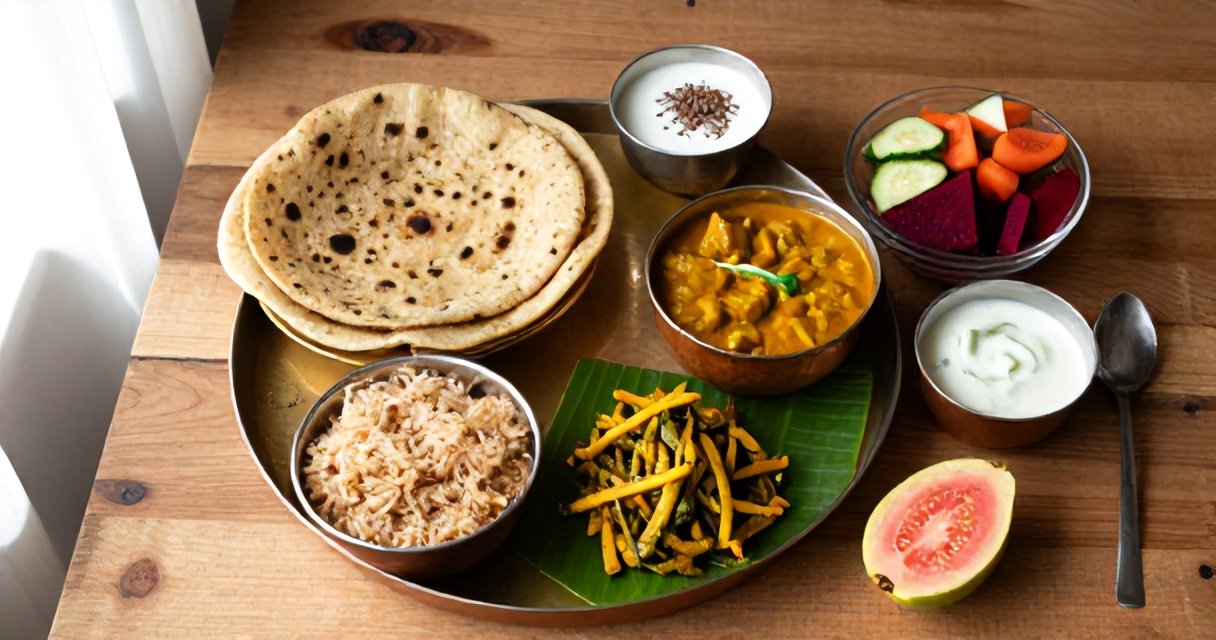
- Lunch: 1 cup brown rice or 2 jowar rotis + 1 cup rajma or chana masala + 1 cup bhindi fry + large mixed salad (cucumber, tomato, carrot, beetroot, lemon).
- Evening: 1 cup sprouted moong chaat with chopped veggies + green tea or lemongrass tea.
- Dinner: 2 bajra rotis + 1 cup lauki-chana dal + 1 cup stir-fried moringa leaves + small bowl raita.
- Bedtime (if hungry): Half cup warm milk with a pinch of haldi or a few roasted chana.
This pattern delivers roughly 30–35 grams of fibre, balanced protein, healthy fats and complex carbs. Notice how every main meal includes a legume, a whole grain, a vegetable and a probiotic element like dahi or chaas.
Smart Cooking Habits That Preserve Fibre
How you cook matters as much as what you cook. Overcooking vegetables until mushy destroys fibre structure and raises the glycemic response. Steam, sauté quickly or pressure-cook for one whistle less than usual. Keep skins on potatoes, sweet potatoes, carrots and cucumbers after a good scrub.
When making atta, mix 2 parts whole wheat with 1 part barley flour and 1 part besan for a fibre boost. Soak rice and millets for 30 minutes before cooking to reduce anti-nutrients and improve texture. Use mustard oil, cold-pressed groundnut oil or ghee in moderation; fat slows digestion further and improves satiety.
Lifestyle Pillars That Amplify the Diet
Fibre works best when supported by movement, sleep and stress regulation. A 15-minute walk after each main meal significantly lowers post-prandial glucose. Resistance training twice a week preserves muscle mass, which is a major glucose sink. Our guide on strength training once weekly after 50 offers a simple starting point that fits busy Indian schedules.
Aim for 7–8 hours of sleep; even one night of poor sleep reduces insulin sensitivity the next day. Practice 5 minutes of deep breathing or yoga nidra before bed. Hydration is crucial — fibre needs water to work; target 2.5–3 litres daily including chaas, nimbu pani and herbal teas.
Common Pitfalls and How to Avoid Them
Jumping from 15 to 35 grams of fibre overnight causes bloating and gas. Increase by 5 grams every 3–4 days while upping water intake. Do not rely solely on packaged "high-fibre" biscuits or cereals; many contain hidden sugars and refined flour. Read labels carefully — our article on how to read food labels explains what to watch for.
Skipping meals and then overeating at night disrupts circadian glucose rhythms. Eat at consistent times. If you take glucose-lowering medication, monitor sugars closely when increasing fibre; your doctor may need to adjust doses. Never stop prescribed medication without medical supervision.
Seasonal and Regional Tweaks
In summer, favour hydrating vegetables like cucumber (kheera), ridge gourd (turai), snake gourd (chichinda) and fruits like jamun and watermelon (seeds removed). Winter brings methi, bathua, sarson, green peas (matar) and carrots — excellent for fibre-rich saags and stuffed rotis. Monsoon is ideal for sprouted legumes, steamed idlis with millet batter and hot rasam with drumstick.
Coastal kitchens can add fish curry with moringa leaves; northern homes can rotate sarson ka saag with makki ki roti; southern meals shine with avial, sambar loaded with vegetables and red rice. The principle stays the same: whole grain + legume + seasonal vegetable + fermented side.
Frequently Asked Questions
High fiber Indian diet plan beats medicine for blood sugar — is this true for everyone?
It works best for prediabetes and early type 2 diabetes alongside lifestyle changes. Advanced cases or type 1 diabetes still need medication; always consult your doctor before making major diet shifts.
Kitne din mein fibre se sugar control hota hai?
Most people notice steadier post-meal readings within 2–4 weeks of consistent high-fibre eating, provided sleep, stress and activity are also addressed.
Can I eat white rice sometimes on a high fibre diet?
Yes. Pair a small portion (half cup cooked) with plenty of dal, sabzi and salad. Cooling cooked rice overnight and reheating increases resistant starch, which acts like fibre.
Which atta is best for sugar control — multigrain or chakki fresh?
Freshly milled whole wheat atta with added barley, chana besan and flaxseed meal beats most commercial multigrain packs that may contain refined flour.
Gharelu nuskhe for sugar control that actually work?
Soaked methi dana, cinnamon (dalchini) in tea, vinegar before meals, and post-meal walks have clinical backing. Use them as add-ons, not replacements for a balanced plate.
Your Next Step Starts in the Kitchen
You already have the ingredients; now it is about assembling them consistently. Start with one swap tomorrow — maybe brown rice for lunch or methi seeds at dawn — and build from there. Track how you feel, not just the numbers. Have you tried a high-fibre Indian plate for blood sugar? Share your favourite fibre-rich combo or a family nuskha in the comments below.
💚 Want more simple, science-backed tips for eating well the Indian way? Download the Healthilicious Plate app for daily health guides, nutrition tips and healthy desi recipes right on your phone.
Disclaimer: This article is for general information only and is not medical advice. Please consult a qualified doctor or registered dietitian before making changes to your diet, especially if you have a health condition, are pregnant or take medication.